INFORMATION PURPOSES ONLY
 NAME: WARTHOG
 SCIENTIFIC NAME: PHACOCHOERUS AFRICANUS
 WEIGHT: 100KG (M) 70KG (F)
 LIFESPAN: 20 YEARS
 ENEMY: LION, LEOPARD, WILD DOG

NAME: WARTHOG
SCIENTIFIC NAME: PHACOCHOERUS AFRICANUS
WEIGHT: 100KG (M) 70KG (F)
LIFESPAN: 20 YEARS
ENEMY: LION, LEOPARD, WILD DOG
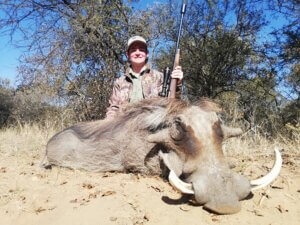
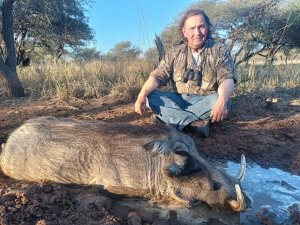
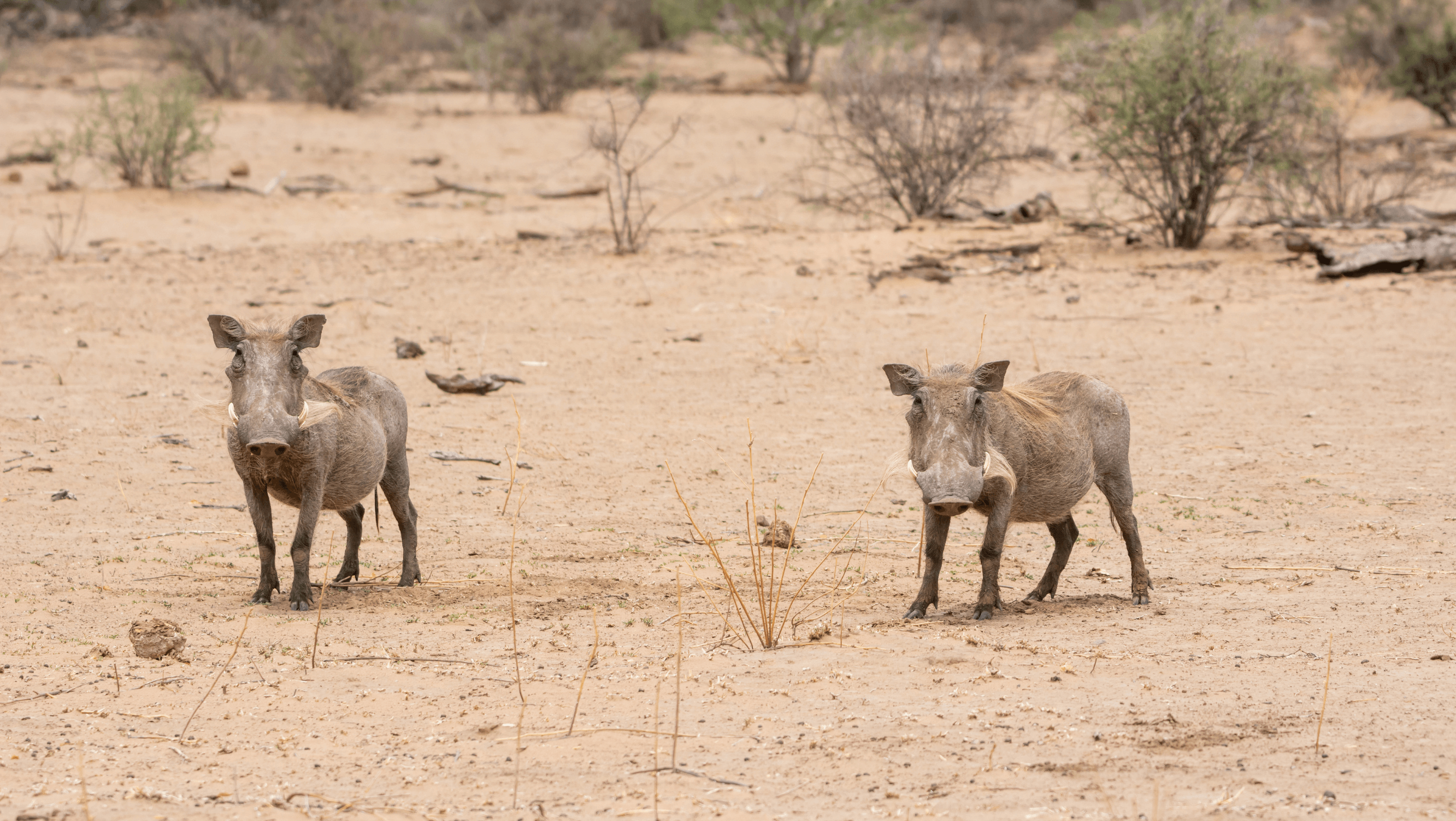
Appearance: Warthogs are characterized by their stocky build, large heads, and protruding tusks. They have coarse, bristly hair covering their bodies, with longer tufts along their backs and tails. The skin on their bodies is grayish or brownish in color, with sparse hair. Warthogs have four elongated warts on their face, two on each side, which give them their name. These warts are made of tough, fibrous tissue and serve as protection during fights. Both males and females have large, upward-curving tusks, although those of males are typically larger. The upper tusks can reach lengths of up to 25 centimeters (10 inches).
Size: Warthogs vary in size, with adults typically standing around 60 to 75 centimeters (24 to 30 inches) tall at the shoulder. They can measure around 100 to 150 centimeters (39 to 59 inches) in length from the tip of the nose to the base of the tail. Warthogs can weigh between 50 to 150 kilograms (110 to 330 pounds), with males being slightly larger and heavier than females.
Habitat: Warthogs inhabit a variety of habitats across sub-Saharan Africa, including grasslands, savannas, woodlands, and semi-arid areas. They are commonly found near water sources such as rivers, streams, and watering holes, where they can wallow in mud to cool off and protect themselves from parasites. Warthogs are adaptable animals and can thrive in both open and densely vegetated areas.
Behavior: Warthogs are primarily diurnal, being most active during the early morning and late afternoon when temperatures are cooler. They are social animals and are often found in small groups known as sounders, which typically consist of a dominant male, several females, and their offspring. Warthogs are skilled diggers and will use their snouts and tusks to excavate burrows or find food buried underground. They are omnivorous and feed on a variety of plant materials, roots, tubers, bulbs, fruits, insects, and small vertebrates.
Reproduction: Breeding among warthogs can occur throughout the year, although peak mating seasons may vary depending on environmental conditions. After a gestation period of around six months, females give birth to a litter of one to eight piglets, although four to six is more common. The piglets are born with a protective membrane covering their eyes, which helps prevent dirt and debris from entering the burrow. They remain hidden in the burrow for the first few weeks of their lives and are nursed by their mother.