INFORMATION PURPOSES ONLY
 NAME: ZEBRA HARTMAN
 SCIENTIFIC NAME: EQUUS ZEBRA HARTMANNAE
 WEIGHT: 330KG (M) 300KG (F)
 LIFESPAN: 35 YEARS
 ENEMY: SPOTTED HYENA, LION, CHEETAH

NAME: ZEBRA HARTMAN
SCIENTIFIC NAME: EQUUS ZEBRA HARTMANNAE
WEIGHT: 330KG (M) 300KG (F)
LIFESPAN: 35 YEARS
ENEMY: SPOTTED HYENA, LION, CHEETAH
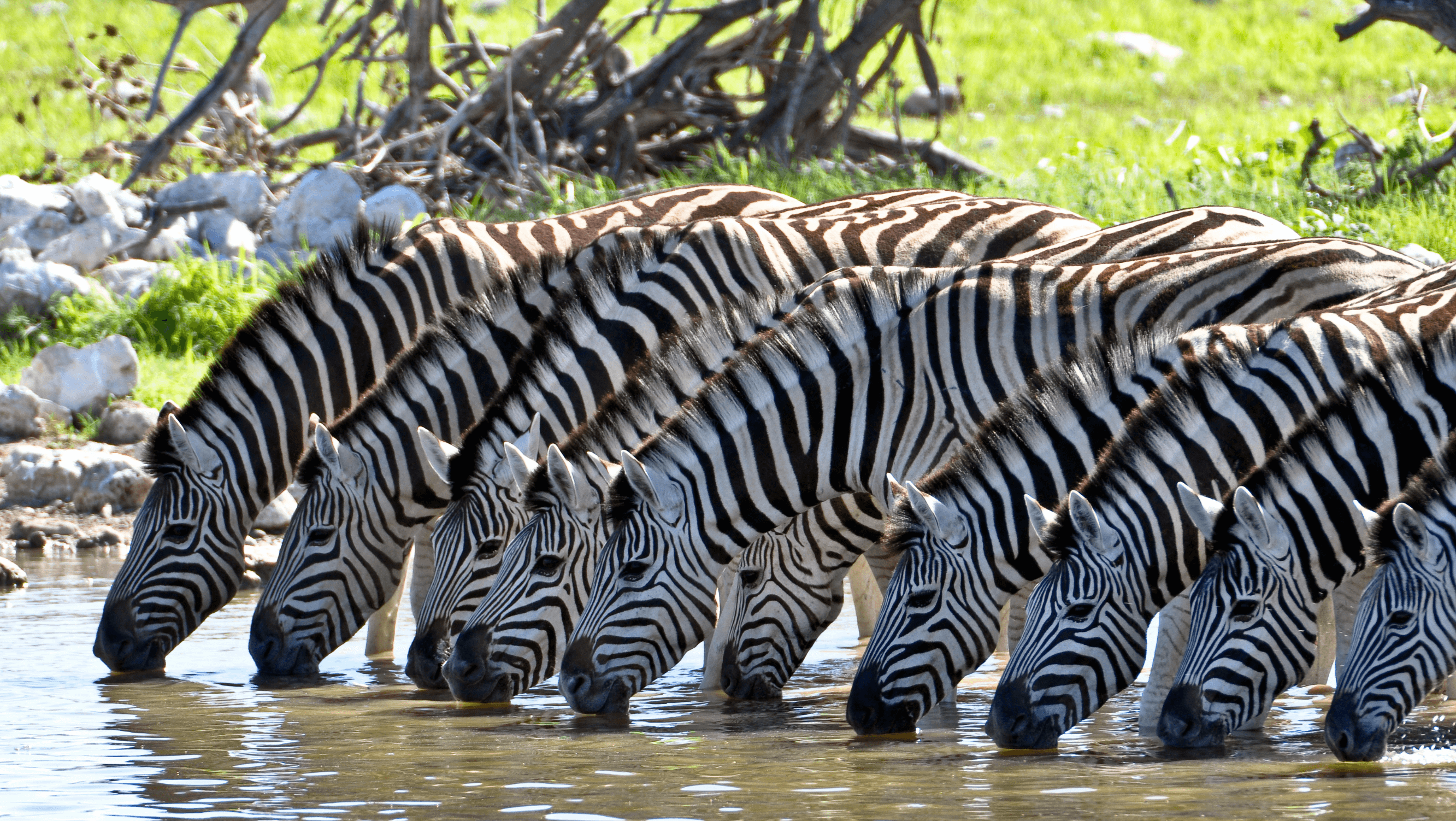
Appearance: Hartmann’s mountain zebras are characterized by their distinctive black and white striped coats, which are unique to each individual. The stripes are broad and closely spaced, extending down the legs and covering the body. They have a white belly and underside, while the background color of the coat can range from light tan to grayish-brown. Unlike other mountain zebra subspecies, Hartmann’s mountain zebras have vertical stripes on their neck and shoulders. They have a short, erect mane and a tuft of hair at the end of the tail. Their ears are rounded and lined with black on the outer edges.
Size: Hartmann’s mountain zebras are medium-sized equids, with adults typically standing around 1.1 to 1.3 meters (3.6 to 4.3 feet) tall at the shoulder. They can measure around 2 to 2.3 meters (6.6 to 7.5 feet) in length from the head to the base of the tail. Hartmann’s mountain zebras can weigh between 220 to 350 kilograms (485 to 770 pounds), with males being slightly larger and heavier than females.
Habitat: Hartmann’s mountain zebras inhabit rugged and mountainous terrain, particularly in arid and semi-arid regions of southwestern Africa. They are well-adapted to rocky slopes, grassy plains, and scrubland habitats. Hartmann’s mountain zebras are often found in areas with access to water sources such as springs, rivers, and waterholes.
Behavior: Hartmann’s mountain zebras are social animals and are often found in small family groups known as harems, which typically consist of a dominant stallion, several females, and their offspring. They communicate through vocalizations, body language, and scent marking. Hartmann’s mountain zebras are agile climbers and are known for their ability to navigate steep and rocky terrain. They are primarily diurnal, being most active during the early morning and late afternoon.
Diet: Hartmann’s mountain zebras are herbivores, feeding primarily on grasses, herbs, leaves, and other vegetation. They are selective grazers and will feed on a variety of plant species depending on availability and nutritional content. Hartmann’s mountain zebras have specialized digestive systems that allow them to extract nutrients from fibrous plant material.