INFORMATION PURPOSES ONLY
 NAME: BUSHBUCK
 SCIENTIFIC NAME: TRAGELAPHUS SCRIPTUS
 WEIGHT: 77KG (M) 36KG (F)
 LIFESPAN: 11 YEARS
 ENEMY: LEOPARD, LION, CARACAL, PYTHON

NAME: BUSHBUCK
SCIENTIFIC NAME: TRAGELAPHUS SCRIPTUS
WEIGHT: 77KG (M) 36KG (F)
LIFESPAN: 11 YEARS
ENEMY: LEOPARD, LION, CARACAL, PYTHON
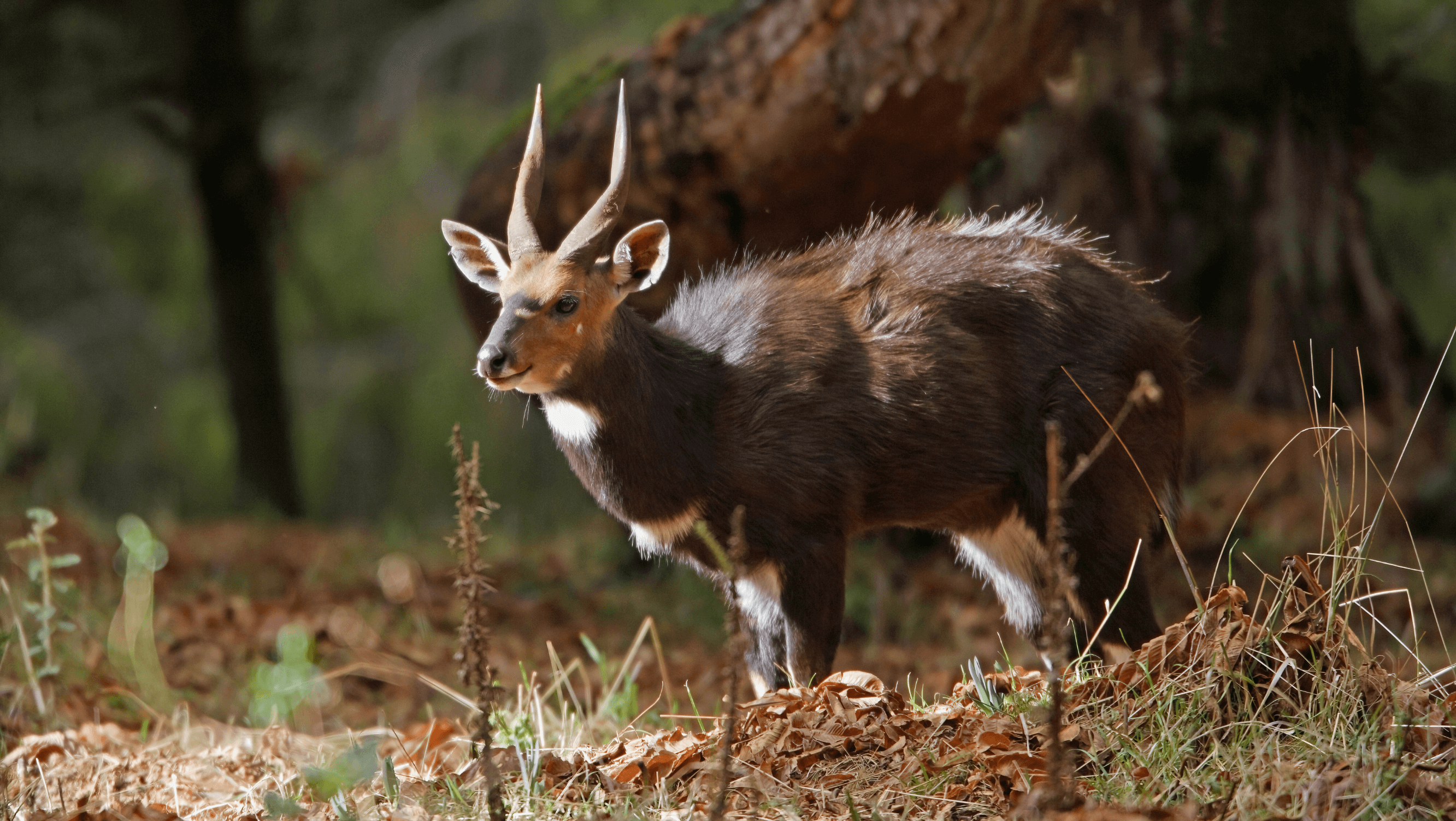
Appearance: Bushbucks have a distinctive coat pattern characterized by a reddish-brown to dark brown coloration with white spots or stripes, depending on the subspecies and individual variation. Their underparts are usually lighter in color, ranging from white to cream. Both males and females have spiral horns, although those of males are typically thicker and longer. The horns are ridged and curve backward, then slightly forward at the tips.
Size: Adult bushbucks typically stand around 70 to 100 centimeters (28 to 39 inches) tall at the shoulder. They can measure between 100 to 150 centimeters (39 to 59 inches) in length from the nose to the base of the tail. Males are generally larger and heavier than females, with weights ranging from 45 to 80 kilograms (99 to 176 pounds), while females weigh slightly less.
Habitat: Bushbucks inhabit a variety of habitats, including dense forests, woodlands, savannas, and montane regions throughout sub-Saharan Africa. They are often found near water sources such as rivers, streams, and swamps, as they require access to water for drinking and bathing.
Behavior: Bushbucks are primarily solitary animals, although they may form small groups, particularly during the breeding season or when resources are abundant. They are crepuscular, meaning they are most active during the early morning and late afternoon, resting in dense vegetation or thickets during the hottest parts of the day to avoid predators.
Diet: As browsers, bushbucks feed on a variety of vegetation, including leaves, shoots, fruits, and flowers. They are known to be selective feeders, preferring certain plant species over others depending on availability and nutritional content.
Reproduction: Breeding among bushbucks can occur throughout the year, although peak mating seasons vary depending on the region. After a gestation period of around six to seven months, females give birth to a single offspring, known as a calf. Calves are usually hidden in dense vegetation for protection from predators.
Conservation Status: Bushbucks are not currently considered a threatened species, although localized population declines have occurred in some regions due to habitat loss, poaching, and human-wildlife conflict. They are adaptable animals capable of surviving in various habitats, which has helped maintain relatively stable populations across their range.