INFORMATION PURPOSES ONLY
 NAME: CROCODILE
 SCIENTIFIC NAME: CROCODYLUS NILOTICUS
 WEIGHT: 750KG (M) 250KG (F)
 LIFESPAN: 100 YEARS
 ENEMY: LION

NAME: CROCODILE
SCIENTIFIC NAME: CROCODYLUS NILOTICUS
WEIGHT: 750KG (M) 250KG (F)
LIFESPAN: 100 YEARS
ENEMY: LION
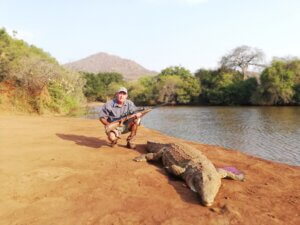
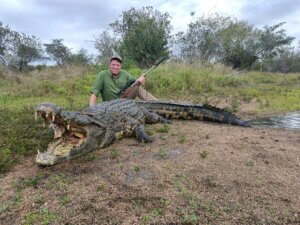
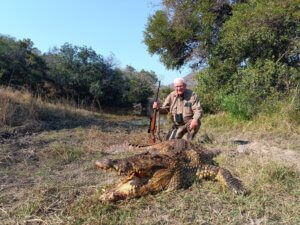
Appearance: Nile crocodiles have a powerful and streamlined body, with a thick, armored hide covered in scales. They typically have a dark green to grayish-brown coloration on their back and sides, which helps them blend in with their environment. Their underparts are usually lighter in color, ranging from cream to yellowish. Nile crocodiles have long, muscular tails that are flattened on the sides, aiding in propulsion through the water. They have a broad, elongated snout filled with sharp teeth, which they use for catching and holding prey.
Size: Nile crocodiles are among the largest crocodile species in the world, with adults typically measuring between 3.5 to 5 meters (11 to 16 feet) in length, although individuals exceeding 6 meters (20 feet) have been recorded. Females are generally smaller than males, with males often reaching larger sizes and weights. Adult Nile crocodiles can weigh anywhere from 225 to 750 kilograms (500 to 1,650 pounds), depending on their size and age.
Habitat: Nile crocodiles inhabit a wide range of freshwater habitats, including rivers, lakes, marshes, and swamps throughout sub-Saharan Africa. They are well adapted to both aquatic and terrestrial environments and may travel long distances overland in search of food, water, or suitable nesting sites.
Behavior: Nile crocodiles are apex predators and are primarily nocturnal hunters, although they may also be active during the day, particularly in cooler weather. They are ambush predators, using stealth and patience to approach their prey before launching a sudden and powerful attack. Nile crocodiles are capable of swimming at high speeds and can move quickly on land when necessary. They are also known for their territorial behavior, particularly during the breeding season when males may engage in aggressive displays to establish dominance.
Diet: Nile crocodiles are opportunistic feeders and will consume a wide variety of prey, including fish, birds, mammals, and even other crocodiles. They are powerful hunters and are capable of taking down large prey using their strong jaws and teeth. Nile crocodiles may also scavenge carrion when available.
Reproduction: Breeding among Nile crocodiles typically occurs during the dry season when water levels are lower and prey concentrations are higher. Females build nests of vegetation along the water’s edge, where they lay clutches of eggs, usually numbering between 20 to 60 eggs. The eggs are incubated for around 80 to 90 days, after which the hatchlings emerge and make their way to the water, where they are immediately vulnerable to predation.
Conservation Status: Nile crocodiles are listed as a species of “Least Concern” on the IUCN Red List, as they have relatively stable populations across their range. However, they face threats from habitat loss, human-wildlife conflict, pollution, and illegal hunting for their skin and meat.