INFORMATION PURPOSES ONLY
 NAME: BUSHPIG
 SCIENTIFIC NAME: POTAMOCHOERUS LARVATUS
 WEIGHT: 82KG (M) 66KG (F)
 LIFESPAN: 20 YEARS
 ENEMY: LEOPARD

NAME: BUSHPIG
SCIENTIFIC NAME: POTAMOCHOERUS LARVATUS
WEIGHT: 82KG (M) 66KG (F)
LIFESPAN: 20 YEARS
ENEMY: LEOPARD
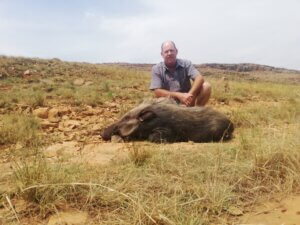
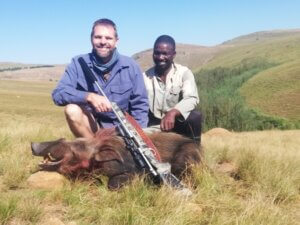
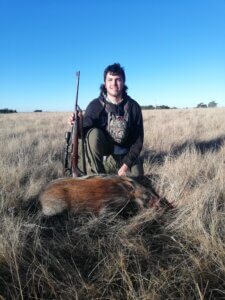
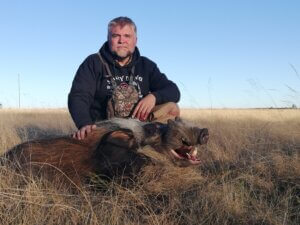
Appearance: Bushpigs have a distinctive appearance with a stocky build, short legs, and a prominent, elongated snout. Their fur is coarse and usually dark brown to black in color, often with lighter patches on the cheeks, throat, and underparts. They have relatively small eyes and ears compared to their body size.
Size: Adult bushpigs typically measure around 70 to 100 centimeters (28 to 39 inches) in shoulder height and can reach lengths of 100 to 150 centimeters (39 to 59 inches) from the tip of the snout to the base of the tail. They can weigh anywhere from 45 to 150 kilograms (99 to 331 pounds), with males generally being larger and heavier than females.
Habitat: Bushpigs are highly adaptable and can be found in a variety of habitats, including forests, woodlands, savannas, grasslands, and riverine areas. They are primarily nocturnal and spend much of their time in dense vegetation or thickets, emerging at night to forage for food.
Behavior: Bushpigs are generally solitary animals, although they may form small family groups consisting of a sow and her offspring. They are omnivorous and opportunistic feeders, consuming a wide range of plant matter, roots, fruits, insects, small mammals, and even carrion. Bushpigs use their strong snouts to root around in the soil in search of food.
Reproduction: Breeding among bushpigs can occur throughout the year, although peak mating seasons may vary depending on the region. After a gestation period of around four to five months, females give birth to a litter of piglets, typically numbering between two to six offspring. The piglets are precocial, meaning they are born relatively developed and can follow their mother shortly after birth.
Conservation Status: Bushpigs are not considered a threatened species and are relatively widespread across their range. However, they may face localized threats from habitat loss, hunting, and human-wildlife conflict, particularly in areas where they come into contact with agricultural activities or human settlements.