- 1 X 1 HUNTER: $8 250
- 2 X 1 HUNTER: $7 850 EACH
- DURATION: 7 HUNTING DAYS
- ACCOMMODATION: ALL INCLUSIVE
- ANIMALS TO HUNT PER HUNTER: 6
- TROPHIES INCLUDED PER HUNTER: IMPALA, WARTHOG, WATERBUCK OR GEMSBUCK, WILDEBEEST BLUE, ZEBRA BURCHELLS, KUDU (UP TO 50″)

IMPALA
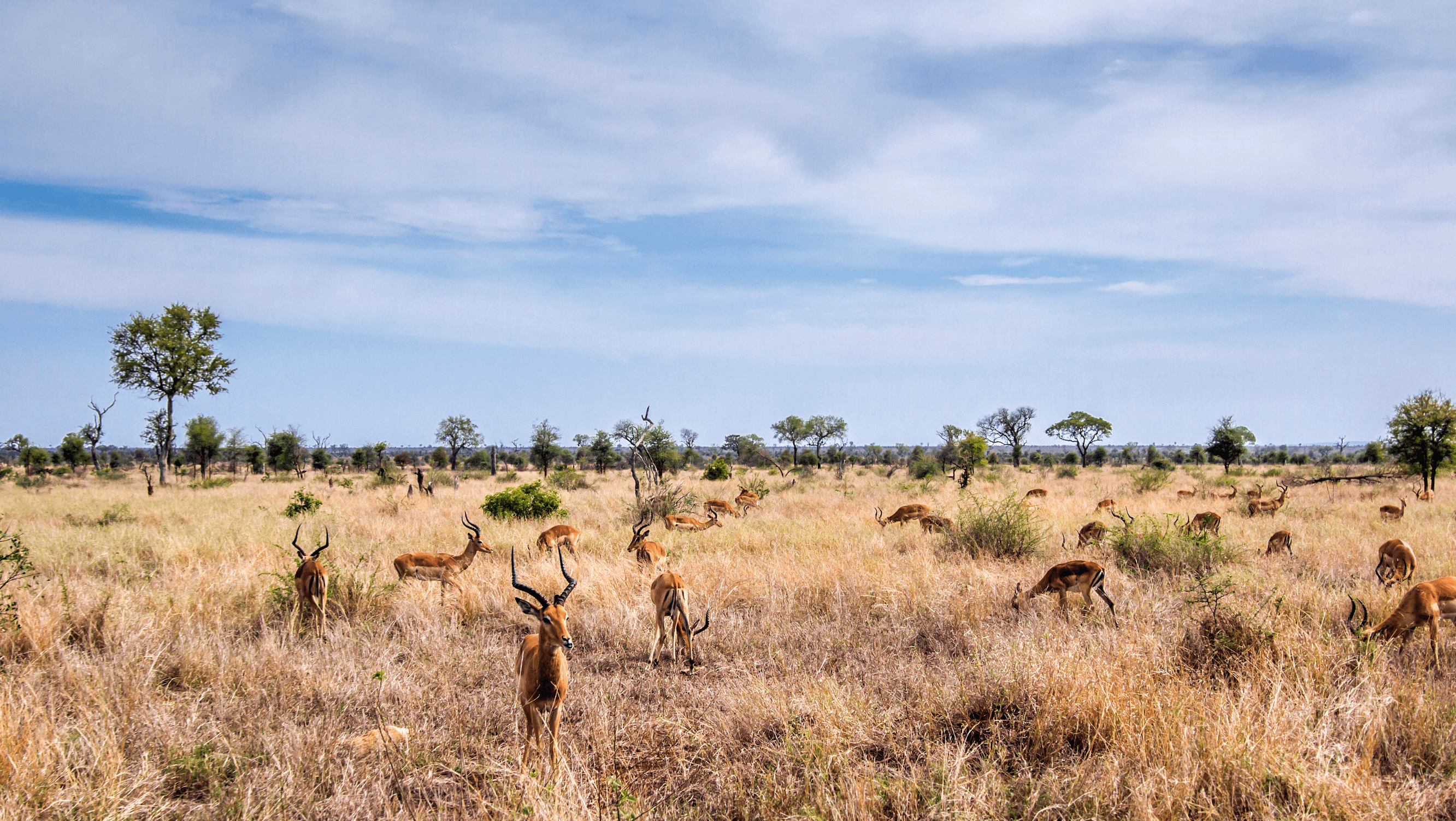
The impala (Aepyceros melampus) is a medium-sized antelope species native to eastern and southern Africa. Renowned for their graceful appearance and impressive leaping ability, impalas are characterized by their reddish-brown coat, white underparts, and distinct black markings on their face and tail. They inhabit a variety of habitats, including savannas, woodlands, and grasslands, where they primarily graze on grasses and herbs. Impalas are highly social animals, forming large herds that can consist of hundreds of individuals.
They use their keen senses and alarm calls to alert each other of potential danger from predators such as lions, leopards, and cheetahs. Despite facing threats from habitat loss and hunting, impala populations remain relatively stable and are a common sight in many African national parks and game reserves. They play a vital role in the ecosystem as both prey for predators and seed dispersers for various plant species.

WARTHOG
The warthog (Phacochoerus africanus) is a species of wild pig native to Africa. Known for its distinctive appearance, the warthog is characterized by its large warts on the sides of its face, which serve as protective pads during fights. They have a compact, robust body with bristly hair and long, upward-curving tusks. Warthogs inhabit a range of habitats, including savannas, grasslands, and woodlands, where they primarily feed on grasses, roots, and bulbs. They are primarily diurnal animals, spending much of their day foraging for food and seeking shelter in burrows or termite mounds during the night.
Warthogs are social animals, often found in small family groups called sounders, typically consisting of a dominant male, several females, and their offspring. Despite facing threats from habitat loss and hunting, warthog populations remain relatively stable across their range. They play a vital role in their ecosystem by aerating the soil and serving as prey for predators such as lions, leopards, and hyenas.

WATERBUCK
The waterbuck (Kobus ellipsiprymnus) is a large antelope species native to sub-Saharan Africa. Recognized for its shaggy brown coat, white markings on the throat and rump, and distinctive white ring on the rump, the waterbuck is well-adapted to a semi-aquatic lifestyle. They inhabit areas near water sources such as rivers, lakes, and marshes, where they can often be seen wading through shallow water. Waterbucks are primarily grazers, feeding on grasses and other vegetation found in their habitat.
They are social animals, typically forming small herds led by a dominant male. Waterbucks have a unique oily secretion in their skin that helps repel water and acts as a form of waterproofing. Despite facing threats from habitat loss and hunting, waterbuck populations remain relatively stable, and they are commonly found in protected areas across their range. They play a vital role in their ecosystem as both grazers and prey for predators such as lions and crocodiles.
OR

GEMSBUCK
The Gemsbuck, or Oryx, is a striking antelope species native to the arid regions of southern Africa. It is renowned for its long, straight horns, striking black and white facial markings, and distinctive pale coat. Gemsbok are well-adapted to their harsh desert habitats, where they primarily graze on tough, thorny vegetation. Despite the arid conditions, they are able to survive without water for extended periods by obtaining moisture from the plants they consume.
Gemsbuck are known for their strength and agility, capable of defending themselves against predators such as lions and hyenas. They play a crucial role in their ecosystem by controlling vegetation growth and providing prey for carnivores. Despite facing challenges such as habitat loss and hunting, gemsbok populations remain relatively stable due to conservation efforts and their ability to adapt to harsh environments.

WILDEBEEST BLUE
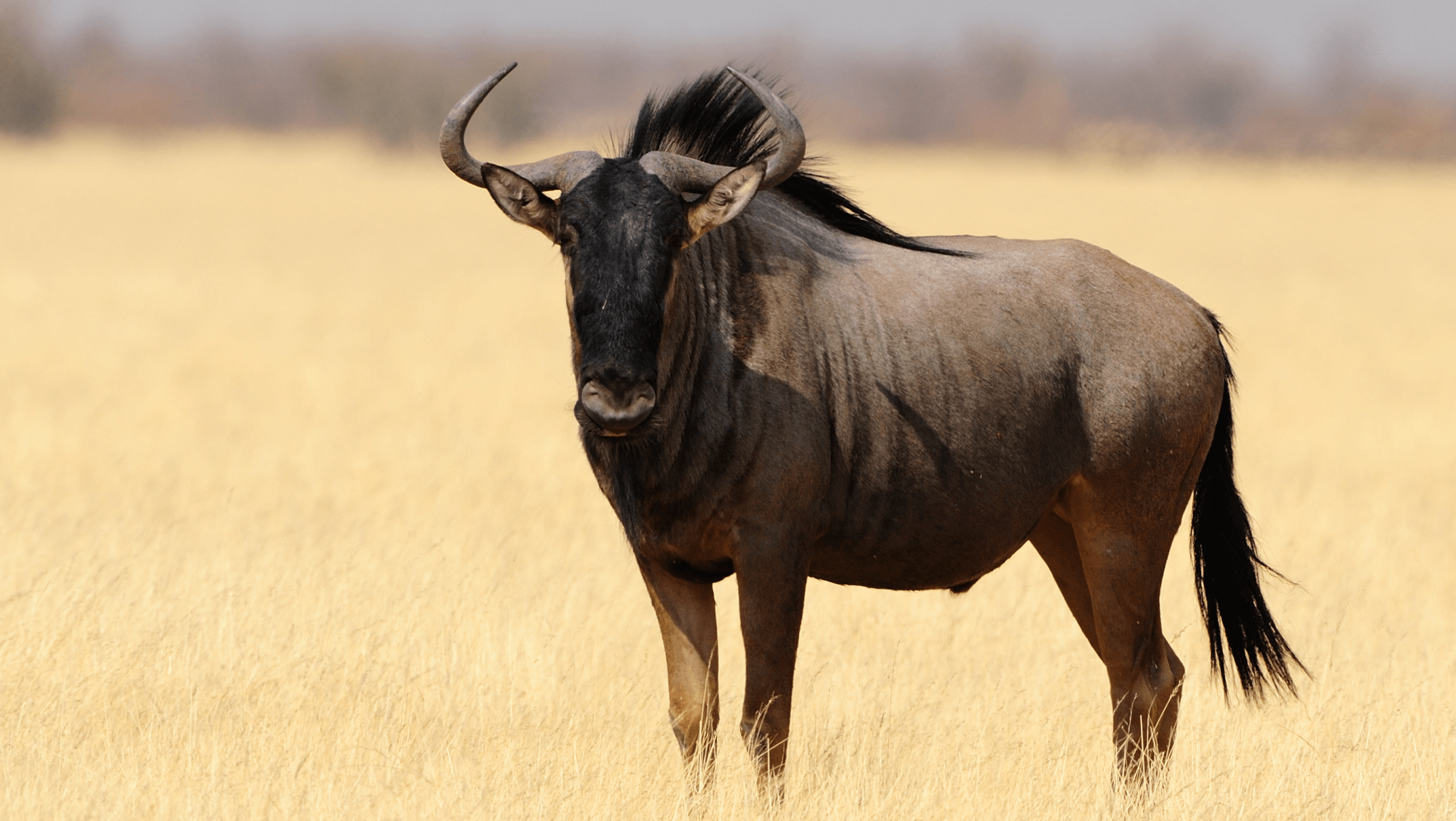
The Blue Wildebeest, also known as the Common Wildebeest or Brindled Gnu (Connochaetes taurinus), is a species of large antelope native to eastern and southern Africa. Recognized for its distinctive appearance, the blue wildebeest has a dark gray or bluish-gray coat with vertical black stripes, a beard-like mane, and curved horns. These herbivores inhabit open plains and savannas, where they graze on grasses and other vegetation.
Blue wildebeests are known for their spectacular migration, often forming massive herds that travel hundreds of kilometers in search of food and water. They play a vital role in their ecosystem by aerating the soil and providing a food source for predators like lions and hyenas. Despite facing threats from habitat loss and hunting, blue wildebeest populations remain relatively stable, and they are a common sight in many protected areas and national parks across Africa.

ZEBRA BURCHELLS
The Burchell’s Zebra, also known simply as the Plains Zebra, is a species of zebra native to the grasslands and savannas of eastern and southern Africa. It is easily recognized by its distinctive black and white striped coat, which varies in pattern among individuals. Burchell’s zebras typically live in small family groups led by a dominant stallion, with females and their offspring forming the core of the herd.
They are herbivores, primarily grazing on grasses and occasionally browsing on leaves and shrubs. Burchell’s zebras play a vital role in their ecosystems by controlling vegetation growth through grazing and providing a food source for predators such as lions and hyenas. They are a common sight in many national parks and reserves across Africa and are a popular attraction for wildlife enthusiasts and tourists.

KUDU (UP TO 50″)
The Kudu (Tragelaphus strepsiceros) is a majestic antelope species native to eastern and southern Africa. It is renowned for its elegant spiral horns, which can reach impressive lengths, especially in males. Kudus are typically found in woodland and scrub habitats, where they feed on leaves, shoots, and grasses. They are characterized by their distinctive white stripes and spots on their reddish-brown coat, which provide effective camouflage in their natural environment.
Kudus are primarily browsers, using their agility to access foliage in dense vegetation. They are also known for their impressive leaping ability, which they use to escape predators. Despite facing threats from habitat loss and hunting, kudu populations persist in protected areas across their range, contributing to the richness of African wildlife.
PACKAGE INCLUDES
A Once-in-a-Lifetime African Safari Adventure
All Accommodation including Room Service
All Catering (Meals and Snacks)
Non-alcoholic drinks, soft drinks, local wines and beer
All Land Transportation for the Duration of the Package
Services of Outfitter and Big Five Registered PH
Hunting Rifle & Ammunition
Services of Staff
Field preparation of trophies
Transport of Trophies to Taxidermy
Laundry Services
Services of trackers and skinners
Government Tax (If Applicable)
Licenses & Permit Fees (excluding Big Five)
PACKAGE EXCLUDES
All International, National and Charter Flights
Airline Duties
Accommodation before & after the contracted Safari
Handling and Transport/Shipping of Trophies
Taxidermy Work
CITES Permits
All Insurance
Visa Costs
All Personal Expenses
Telephone Calls, Tips for Staff, Gifts, Curious
Alcoholic Drinks
Additional sightseeing guided tours
SUMMARY
Embark on an unforgettable journey into the heart of the Mpumalanga with our seven-day Bushveld hunting package. This African safari promises excitement and adventure in South Africa’s wild landscapes. Included in this package are six coveted trophies of South African game, ensuring a rewarding hunt. Located just two hours and thirty minutes from OR Tambo International Airport in Johannesburg, our hunting grounds offer convenience without sacrificing the thrill of the chase.
DETAILED SUMMARY
DAY 1: ARRIVAL
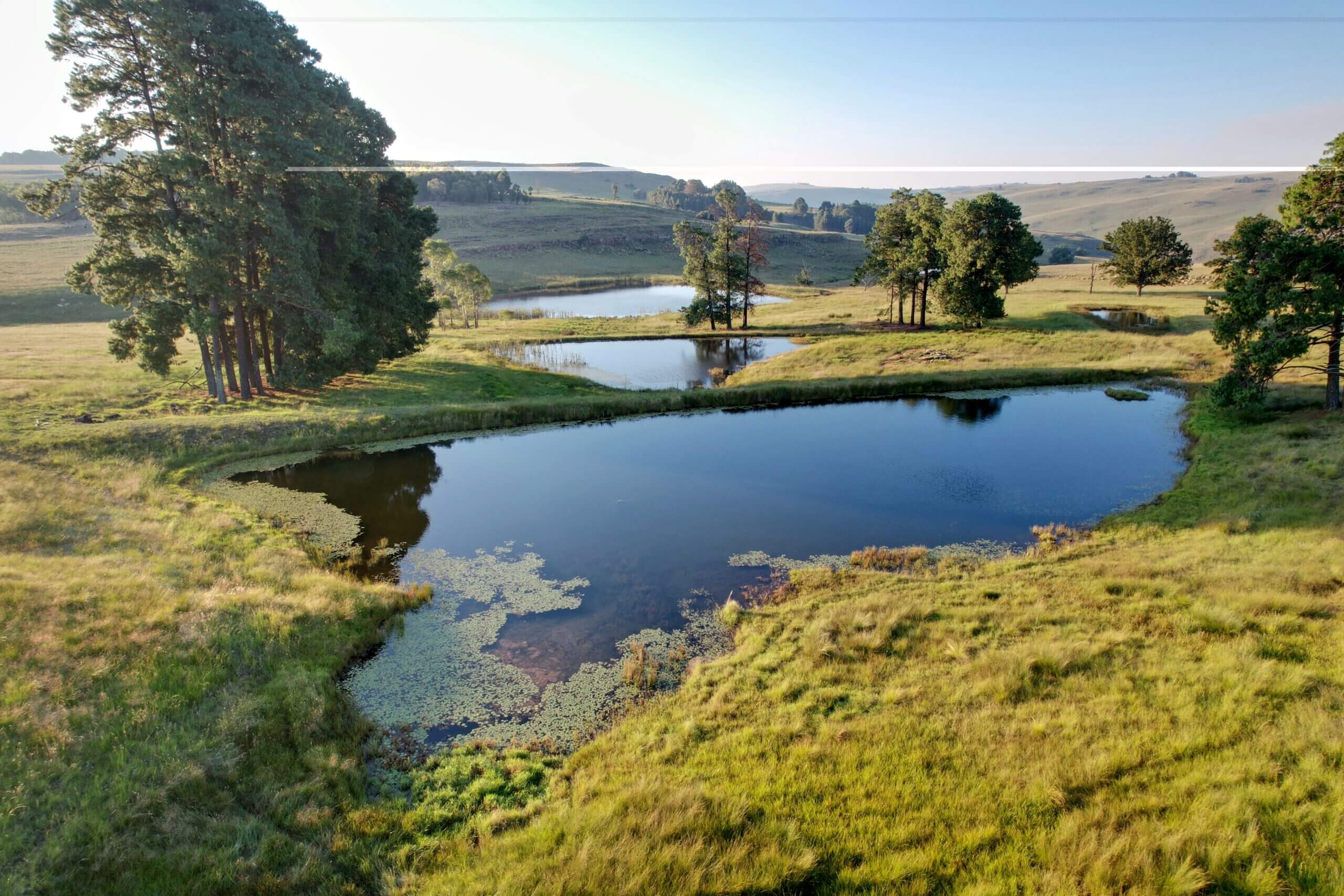
Upon arrival at OR Tambo International, you’ll receive a warm welcome from Outfitter and Big Five registered Professional Hunter Kobus Davel, easily identifiable by the sign bearing your name in the arrivals lounge. After the meet and greet, we’ll journey to our hunting camp nestled in the scenic lowveld of Mpumalanga. The afternoon is dedicated to rifle sighting and settling into the tranquil surroundings of Dullstroom.
55
IMPALA (MPH)
30
WARTHOG (MPH)
30
WATERBUCK (MPH)
40
GEMSBUCK (MPH)
55
WILDEBEEST BLUE (MPH)
40
ZEBRA BURCHELLS (MPH)
43
KUDU (MPH)
DAY 2-8: HUNTING
Experience exhilarating days immersed in hunting within the captivating bushveld of Lowveld Mpumalanga. This diverse region boasts wooded savannas of varying densities, from lush ravines to expansive open plains. It’s a haven for a multitude of mammal species, making it a prime hunting destination and one of South Africa’s most esteemed areas for the pursuit of game.
If the chance arises, you’re encouraged to pursue additional trophies beyond those included in your package. Pre-booking is required for all dangerous game. Any extra trophies will incur charges as listed on the species price list.
DAY 9: DEPARTURE
After a final morning amidst the African wilderness, some time is dedicated to paperwork, followed by a journey back to Johannesburg OR Tambo International airport, marking the conclusion of an unforgettable African hunting safari.