INFORMATION PURPOSES ONLY
 NAME: HARTEBEEST RED
 SCIENTIFIC NAME: ALCELAPHUS BUSELAPHUS
 WEIGHT: 180KG (M) 136KG (F)
 LIFESPAN: 13 YEARS
 ENEMY: SPOTTED HYENA, LEOPARD, LION, WILD DOG

NAME: HARTEBEEST RED
SCIENTIFIC NAME: ALCELAPHUS BUSELAPHUS
WEIGHT: 180KG (M) 136KG (F)
LIFESPAN: 13 YEARS
ENEMY: SPOTTED HYENA, LEOPARD, LION, WILD DOG
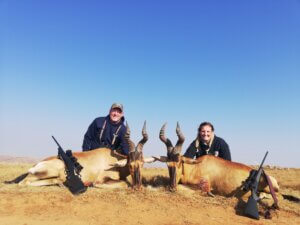
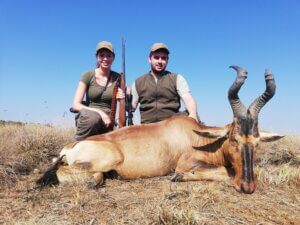
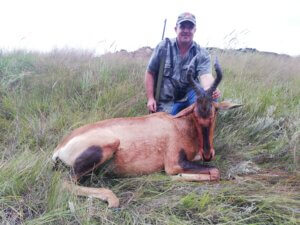
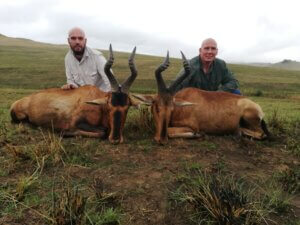
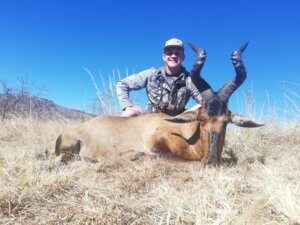
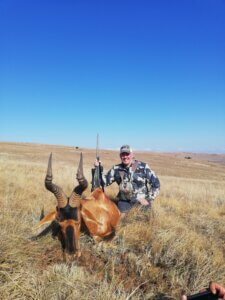
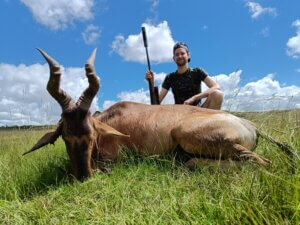
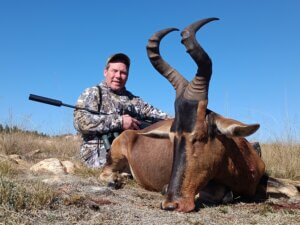
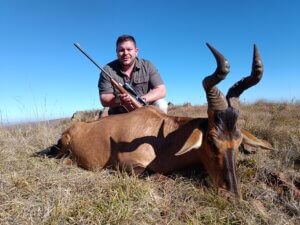
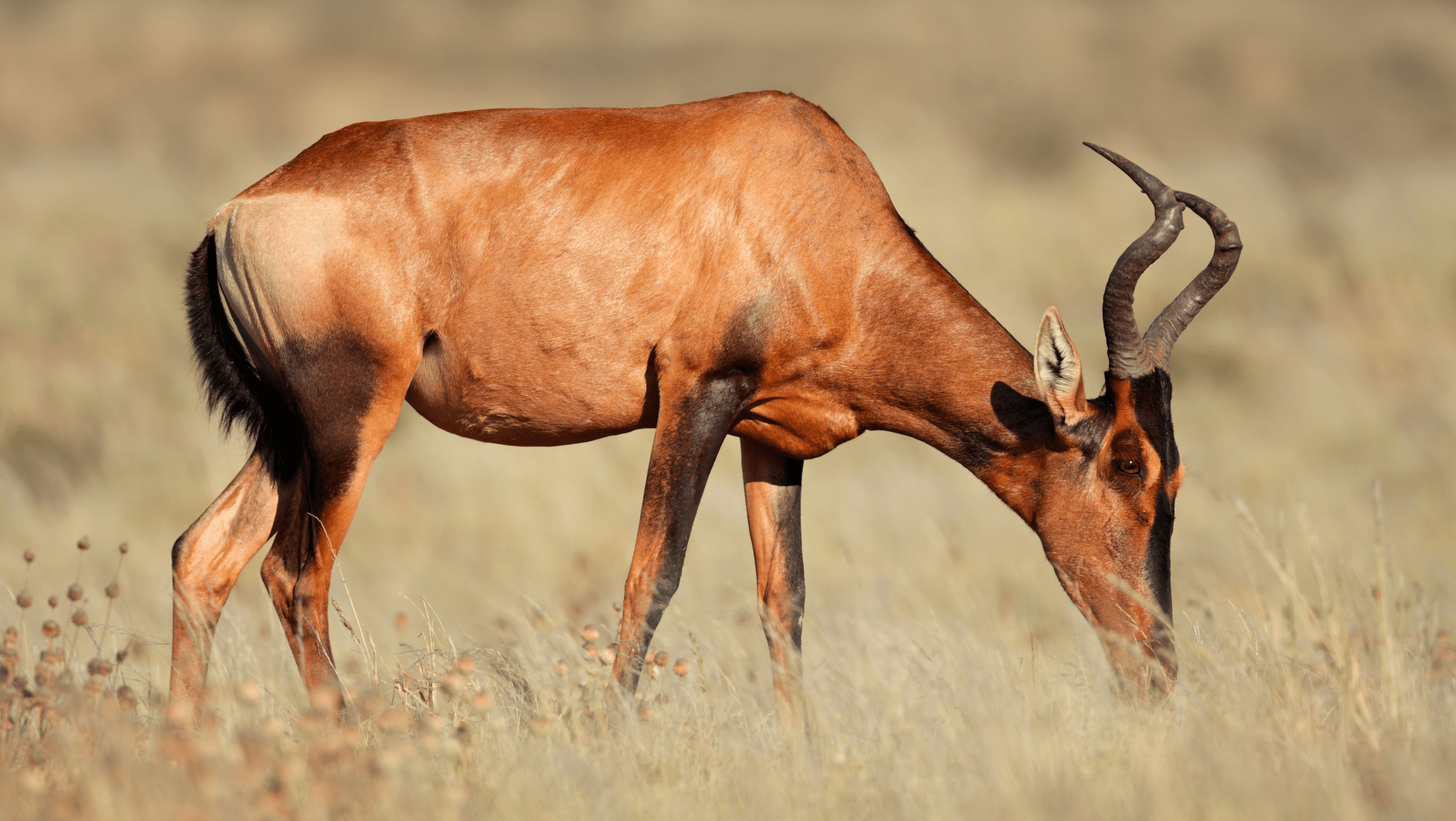
Appearance: Red hartebeests have a sleek and robust body with a slightly sloping back and long, slender legs. Their coat is a reddish-brown to chestnut color, which may appear darker during the winter months. They have a white patch on their rump, a lighter-colored belly, and a tuft of black hair on their tail. Their face is adorned with striking black markings, including dark patches around the eyes and muzzle, as well as black streaks on the forehead. Both males and females have long, pointed horns that curve backward and slightly upward.
Size: Red hartebeests are medium to large antelopes, typically standing around 1.1 to 1.3 meters (3.6 to 4.3 feet) tall at the shoulder. They can measure between 1.8 to 2.3 meters (5.9 to 7.5 feet) in length from the nose to the base of the tail. On average, they weigh between 120 to 180 kilograms (265 to 400 pounds), with males being slightly larger and heavier than females.
Habitat: Red hartebeests inhabit a variety of habitats across southern Africa, including savannas, grasslands, scrublands, and semi-desert regions. They are often found in open plains or lightly wooded areas, where they have access to grazing areas and can easily detect predators. Red hartebeests are well adapted to arid environments and can survive with limited water sources.
Behavior: Red hartebeests are primarily diurnal, being most active during the early morning and late afternoon when temperatures are cooler. They are social animals and may form small herds consisting of females and their offspring, with adult males sometimes forming bachelor groups. During the breeding season, which typically occurs in the late summer or early autumn, males may engage in ritualized displays and sparring matches to establish dominance and access to females. Red hartebeests are fast runners and can reach speeds of up to 55 kilometers per hour (34 miles per hour) when fleeing from predators.
Diet: Red hartebeests are herbivores, feeding primarily on grasses, herbs, and other vegetation found in their habitat. They are selective grazers and may favor certain plant species over others depending on availability and nutritional content. Red hartebeests have efficient digestive systems that allow them to extract nutrients from tough, fibrous plant material.
Reproduction: Breeding among red hartebeests typically occurs throughout the year, although peak mating seasons may vary depending on environmental conditions. After a gestation period of around eight to nine months, females give birth to a single calf, which is usually born in tall grass or dense vegetation for protection. The calf remains close to its mother for several months, nursing and learning essential survival skills before joining the rest of the herd.