INFORMATION PURPOSES ONLY
 NAME: NYALA
 SCIENTIFIC NAME: TRAGELAPHUS ANGASII
 WEIGHT: 126KG (M) 68KG (F)
 LIFESPAN: 13 YEARS
 ENEMY: SPOTTED HYENA, LEOPARD, LION

NAME: NYALA
SCIENTIFIC NAME: TRAGELAPHUS ANGASII
WEIGHT: 126KG (M) 68KG (F)
LIFESPAN: 13 YEARS
ENEMY: SPOTTED HYENA, LEOPARD, LION
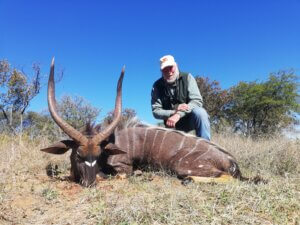
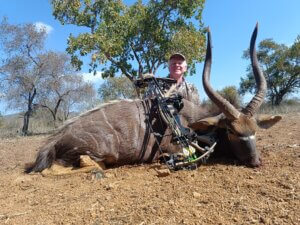
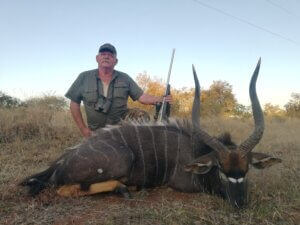
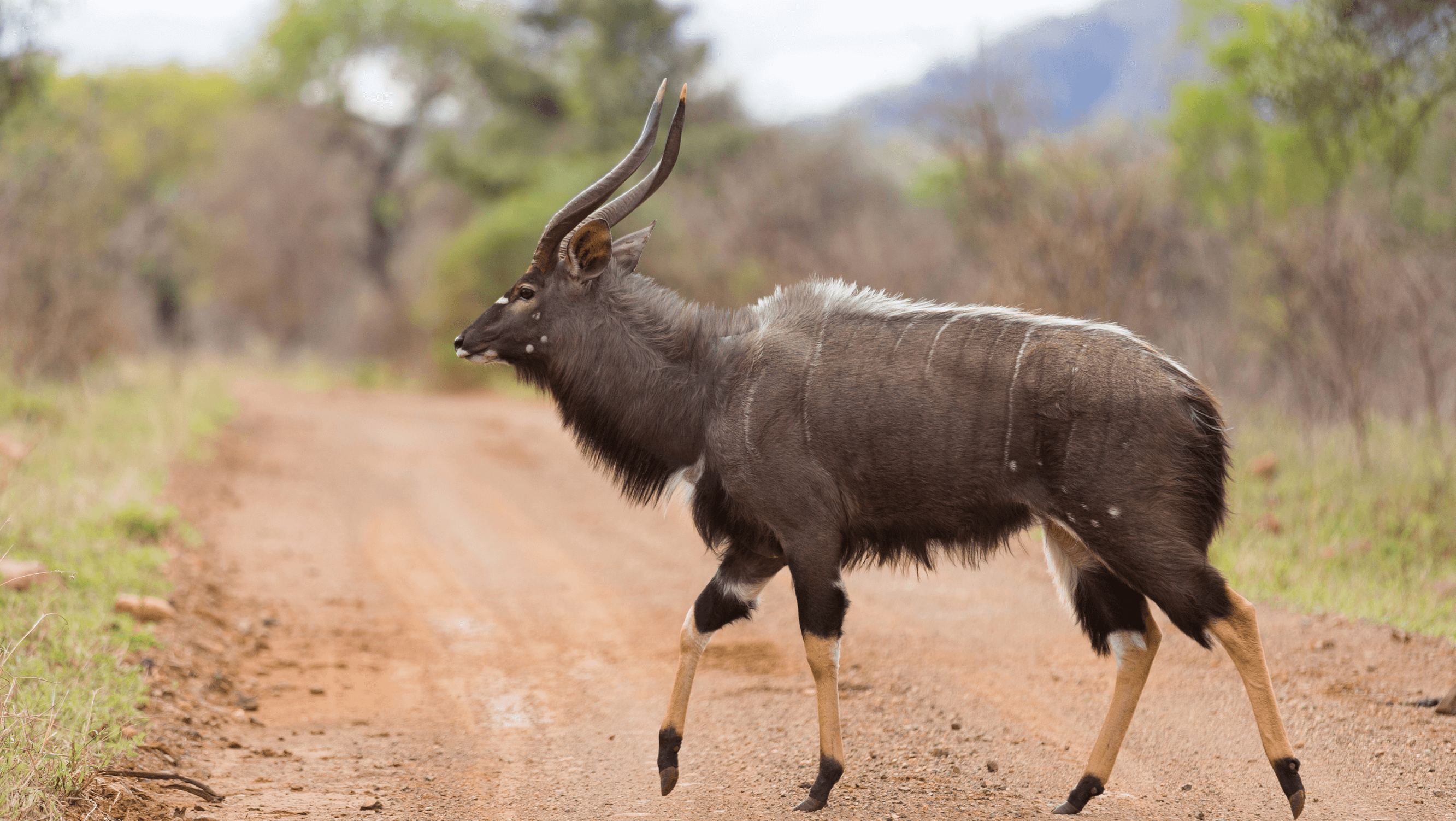
Appearance: Nyala are sexually dimorphic, meaning males and females have markedly different appearances. Adult males have a dark brown to gray coat with white vertical stripes and spots, which provide excellent camouflage in their woodland habitat. They also feature a shaggy mane along the neck and shoulders, as well as long, spiral-shaped horns that can reach up to 80 centimeters (31 inches) in length. Males also sport a ridge of long hair along their backs, known as a “cape.” In contrast, adult females have a reddish-brown coat with vertical stripes and spots, but lack the shaggy mane and horns.
Size: Nyala are medium-sized antelopes, with males being larger and heavier than females. Adult males typically stand around 100 to 120 centimeters (39 to 47 inches) tall at the shoulder and weigh between 100 to 120 kilograms (220 to 265 pounds). Females are smaller, standing around 90 to 100 centimeters (35 to 39 inches) tall and weighing between 55 to 70 kilograms (121 to 154 pounds).
Habitat: Nyala are primarily found in dense woodlands, thickets, and riverine forests in southern Africa, particularly in countries such as South Africa, Mozambique, and Zimbabwe. They prefer habitats with thick vegetation and access to water sources, where they can find cover and forage for food. Nyala are particularly well adapted to living near water and are often found in areas with dense riverine vegetation.
Behavior: Nyala are primarily browsers, feeding on leaves, shoots, fruits, and flowers from a variety of trees and shrubs found in their woodland habitat. They are primarily active during the early morning and late afternoon, resting in shaded areas during the heat of the day. Nyala are generally solitary animals or found in small groups consisting of females and their offspring. Males may form bachelor groups or solitary territories, especially during the mating season.
Reproduction: Breeding among nyala typically occurs throughout the year, although peak mating seasons may vary depending on environmental conditions. After a gestation period of around seven months, females give birth to a single calf, although twins are possible but rare. The calf is able to stand and walk shortly after birth and will remain close to its mother for protection and nourishment during its early days. Female nyala are attentive mothers and will nurse and care for their offspring until they are old enough to fend for themselves.