INFORMATION PURPOSES ONLY
 NAME: PORCUPINE
 SCIENTIFIC NAME: HYSTRIX AFRICAEAUSTRALIS
 WEIGHT: 19KG (M) 24KG (F)
 LIFESPAN: 20 YEARS
 ENEMY: CHEETAH, LEOPARD, LION, CARACAL

NAME: PORCUPINE
SCIENTIFIC NAME: HYSTRIX AFRICAEAUSTRALIS
WEIGHT: 19KG (M) 24KG (F)
LIFESPAN: 20 YEARS
ENEMY: CHEETAH, LEOPARD, LION, CARACAL
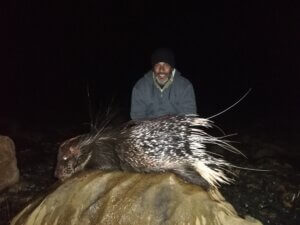
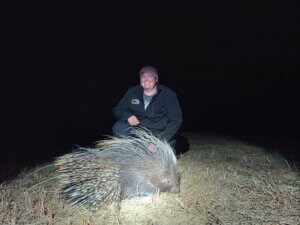
Appearance: Porcupines have a stout and heavily built body covered in quills, which are modified hairs made of keratin. These quills are typically brown or black in color and can measure up to 30 centimeters (12 inches) in length. The quills are interspersed with softer fur, giving the porcupine a bristly appearance. They have a small head with large, dark eyes, a blunt snout, and small rounded ears. Porcupines have strong claws on their front feet for digging and foraging.
Size: Porcupines vary in size depending on the species and geographic location, but they are generally medium-sized rodents. On average, porcupines measure around 60 to 90 centimeters (24 to 36 inches) in length, excluding their tails, which can add an additional 20 to 30 centimeters (8 to 12 inches). They typically weigh between 5 to 16 kilograms (11 to 35 pounds), with males being larger and heavier than females.
Habitat: Porcupines are found in a variety of habitats across the world, including forests, woodlands, grasslands, and deserts. They are adaptable animals and can thrive in both temperate and tropical environments. Porcupines are primarily terrestrial but are capable climbers and may seek refuge in trees or shrubs when threatened.
Behavior: Porcupines are primarily nocturnal animals, being most active during the night when temperatures are cooler. They are solitary creatures and spend much of their time foraging for food and shelter. Porcupines are herbivores and feed on a variety of plant materials, including bark, leaves, twigs, fruits, and roots. They have specialized digestive systems that allow them to extract nutrients from tough, fibrous plant material.
Defense Mechanism: Porcupines are best known for their unique defense mechanism—sharp, barbed quills that cover their bodies. When threatened, porcupines will raise their quills and may lash out with their tails, embedding the quills into the predator’s skin. Contrary to popular belief, porcupines cannot shoot their quills, but the quills are easily dislodged upon contact. The quills have backward-facing barbs that make them difficult and painful to remove, often causing injury and infection in predators.
Reproduction: Breeding among porcupines typically occurs during the fall or early winter, depending on the species and geographic location. After a gestation period of around three to six months, females give birth to a single offspring, known as a porcupette. The porcupette is born with soft quills that harden within a few days, allowing it to defend itself. Porcupettes are precocial and will remain with their mother for several months before venturing out on their own.