INFORMATION PURPOSES ONLY
 NAME: SPRINGBUCK COMMON
 SCIENTIFIC NAME: ANTIDORCAS MARSUPIALIS
 WEIGHT: 48KG (M) 44KG (F)
 LIFESPAN: 10 YEARS
 ENEMY: BROWN HYENA, SPOTTED HYENA, CHEETAH, LEOPARD, LION, WILD DOG

NAME: SPRINGBUCK COMMON
SCIENTIFIC NAME: ANTIDORCAS MARSUPIALIS
WEIGHT: 48KG (M) 44KG (F)
LIFESPAN: 10 YEARS
ENEMY: BROWN HYENA, SPOTTED HYENA, CHEETAH, LEOPARD, LION, WILD DOG
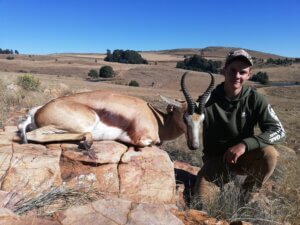
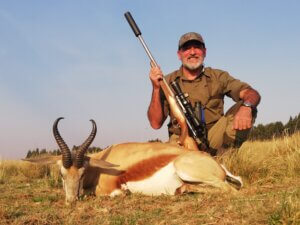
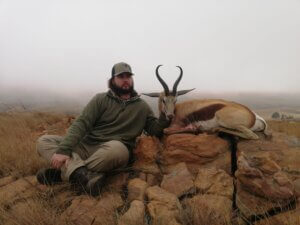
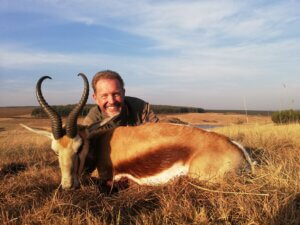
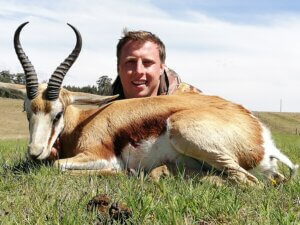
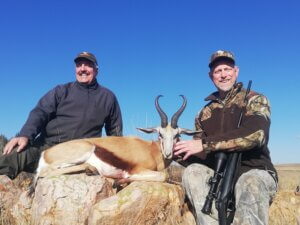
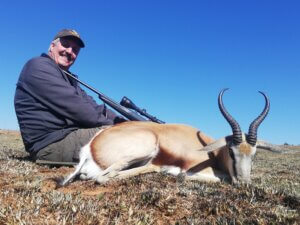
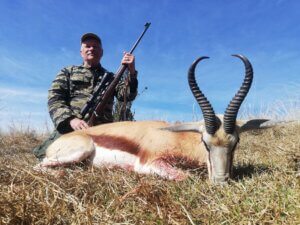
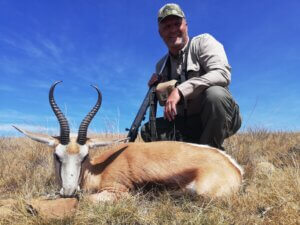
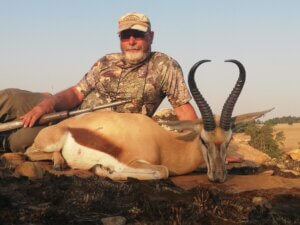
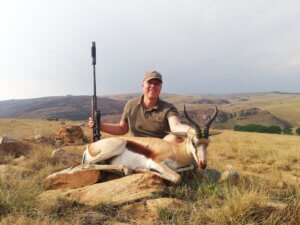
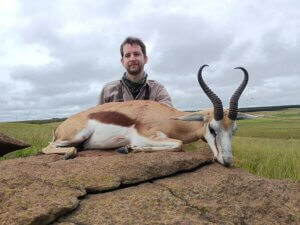
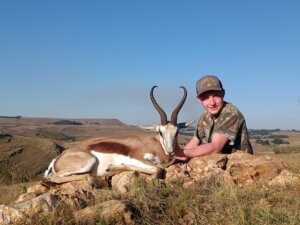
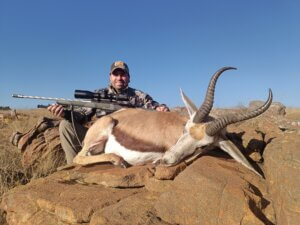
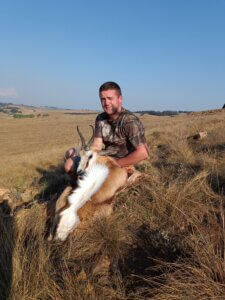
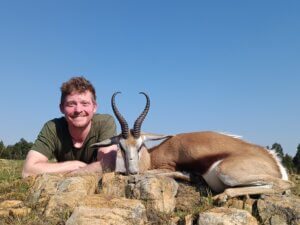
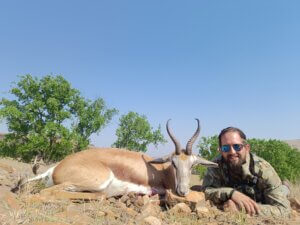
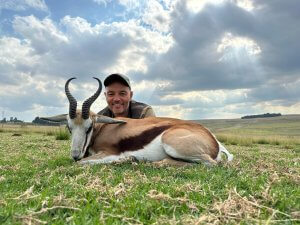
Appearance: Common springboks have a sleek and slender build, with long legs and a small head. They are primarily tan to reddish-brown in color, with a white underside and a dark stripe running along their sides from the upper forelegs to the rear. Springboks have a small, white facial marking above the eyes and a patch of white fur on the rump. During their distinctive jumping behavior, known as pronking, they display the white patch on their rumps prominently. Both males (rams) and females (ewes) have slightly curved, lyre-shaped horns, although those of males are typically longer and more robust.
Size: Common springboks are medium-sized antelopes, with adults typically standing around 75 to 90 centimeters (30 to 35 inches) tall at the shoulder. They weigh between 30 to 50 kilograms (66 to 110 pounds), with males being slightly larger and heavier than females.
Habitat: Common springboks inhabit a variety of habitats across southern Africa, including grasslands, savannas, and semi-arid regions. They are particularly well-adapted to arid environments and can survive in areas with limited water sources. Springboks are also known to undertake seasonal migrations in search of food and water.
Behavior: Common springboks are diurnal animals, being most active during the early morning and late afternoon when temperatures are cooler. They are highly social animals and are often found in large herds consisting of several dozen individuals. Springboks are known for their distinctive behavior known as “pronking,” where they leap into the air with all four feet simultaneously, arching their backs and displaying the white patch on their rumps. This behavior is thought to be a form of communication or a way to display fitness to potential mates.
Diet: Common springboks are herbivores, feeding primarily on grasses, leaves, and other vegetation. They are selective feeders and will graze on a variety of plant species depending on availability and nutritional content. Springboks have specialized digestive systems that allow them to extract nutrients from tough, fibrous plant material found in their arid habitat.