INFORMATION PURPOSES ONLY
 NAME: STEENBUCK
 SCIENTIFIC NAME: RAPHICERUS CAMPESTRIS
 WEIGHT: 13KG (M) 13KG (F)
 LIFESPAN: 6 YEARS
 ENEMY: CHEETAH, LEOPARD, LION, ROOIKAT, WILD DOG, PYTHON

NAME: STEENBUCK
SCIENTIFIC NAME: RAPHICERUS CAMPESTRIS
WEIGHT: 13KG (M) 13KG (F)
LIFESPAN: 6 YEARS
ENEMY: CHEETAH, LEOPARD, LION, ROOIKAT, WILD DOG, PYTHON
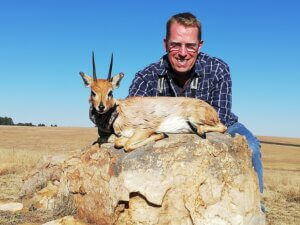
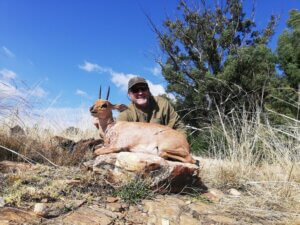
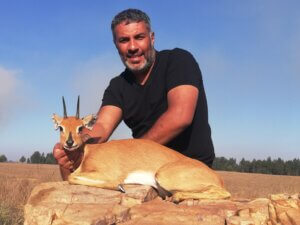
Appearance: Steenboks have a small and slender build, with a compact body and short legs. They have a distinctive reddish-brown coat, which helps them blend into their surroundings. The coat may vary slightly in shade depending on the region and time of year. Steenboks have large, dark eyes, prominent ears, and a short, pointed muzzle. Both males and females have straight, sharp horns, although those of males are slightly larger. The horns are typically around 7 to 19 centimeters (3 to 7 inches) long and are usually hidden beneath tufts of hair on the forehead.
Size: Steenboks are among the smallest antelope species, with adults typically standing around 50 to 60 centimeters (20 to 24 inches) tall at the shoulder. They weigh between 7 to 16 kilograms (15 to 35 pounds), with males being slightly larger and heavier than females.
Habitat: Steenboks inhabit a variety of habitats, including grasslands, savannas, scrublands, and semi-arid regions. They are well-adapted to arid environments and can survive in areas with limited water sources. Steenboks are also commonly found in agricultural areas and may venture into cultivated fields in search of food.
Behavior: Steenboks are primarily crepuscular, being most active during the early morning and late afternoon when temperatures are cooler. They are typically solitary animals, although they may form monogamous pairs during the breeding season. Steenboks are territorial and will mark their territories using scent glands located on their faces and feet. They are agile runners and will flee from potential threats by darting into dense vegetation or hiding in tall grasses.
Diet: Steenboks are herbivores, feeding primarily on grasses, leaves, fruits, and flowers. They are selective feeders and will browse on a variety of plant species depending on availability and nutritional content. Steenboks have specialized digestive systems that allow them to extract nutrients from tough, fibrous vegetation found in their arid habitat.