INFORMATION PURPOSES ONLY
 NAME: WATERBUCK
 SCIENTIFIC NAME: KOBUS ELLIPSIPRYMNUS
 WEIGHT: 270KG (M) 250KG (F)
 LIFESPAN: 14 YEARS
 ENEMY: SPOTTED HYENA, CHEETAH, LION, WILD DOG

NAME: WATERBUCK
SCIENTIFIC NAME: KOBUS ELLIPSIPRYMNUS
WEIGHT: 270KG (M) 250KG (F)
LIFESPAN: 14 YEARS
ENEMY: SPOTTED HYENA, CHEETAH, LION, WILD DOG
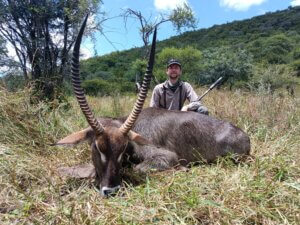
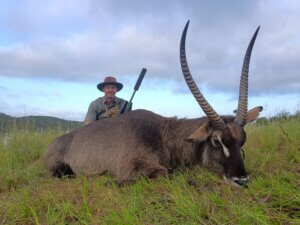
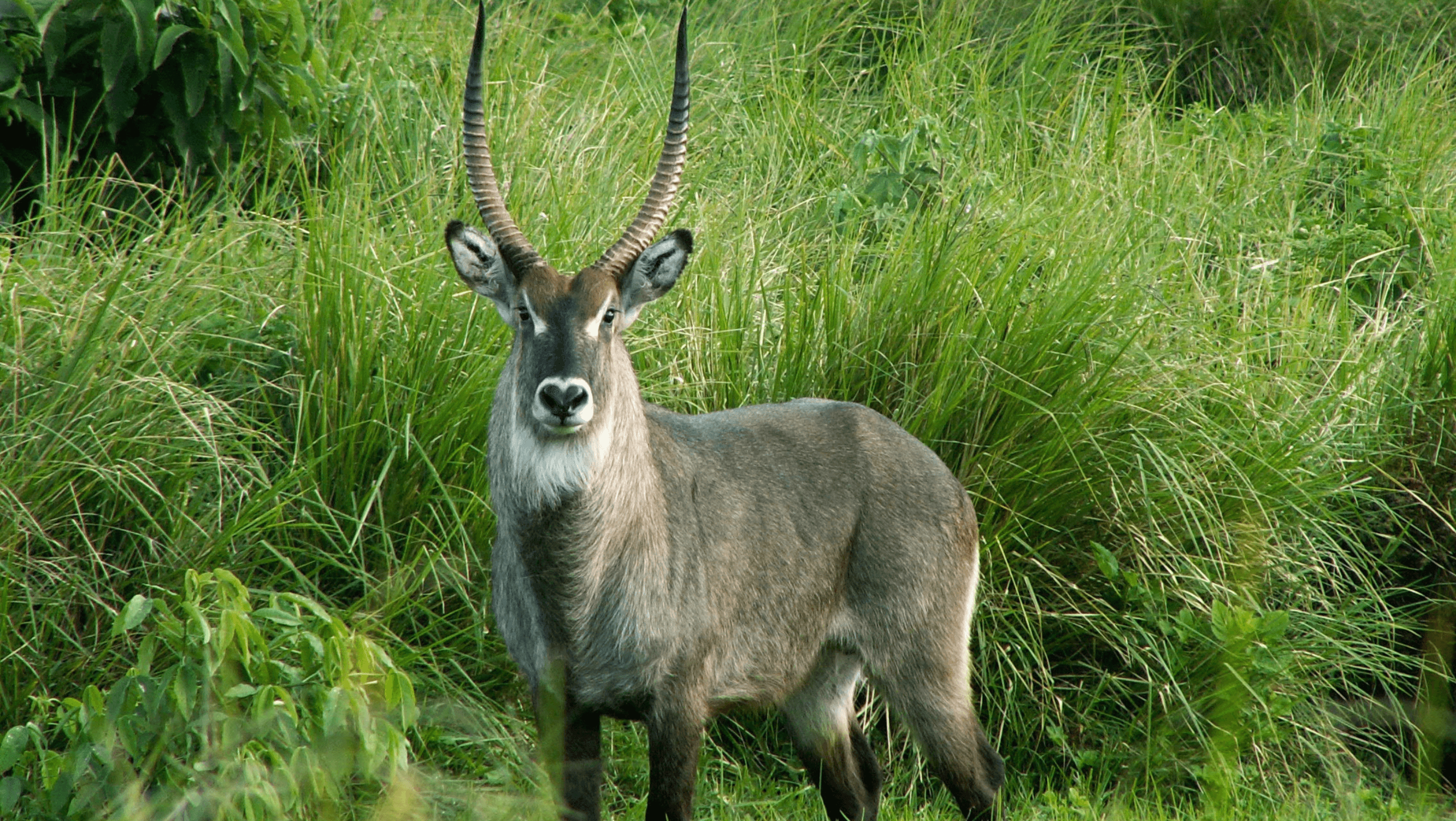
Appearance: Waterbucks are characterized by their shaggy, reddish-brown coats with a distinctive white ring around their rump. They have a white patch on their throat, chin, and underside, which contrasts with their darker fur. Both males (bulls) and females (cows) have long, curved horns, although those of males are typically larger and more robust. The horns have a distinctive lyre-shaped curve and can measure up to 60 to 90 centimeters (24 to 35 inches) in length.
Size: Waterbucks are large antelopes, with adults typically standing around 120 to 136 centimeters (47 to 54 inches) tall at the shoulder. They can measure around 190 to 240 centimeters (75 to 94 inches) in length from the tip of the nose to the base of the tail. Waterbucks can weigh between 160 to 270 kilograms (350 to 595 pounds), with males being slightly larger and heavier than females.
Habitat: Waterbucks inhabit a variety of habitats near water sources such as rivers, lakes, marshes, and swamps. They are commonly found in grasslands, woodlands, and savannas across sub-Saharan Africa. Waterbucks are well-adapted to aquatic environments and are often seen grazing in wetland areas, where they can escape from predators and access fresh water easily.
Behavior: Waterbucks are primarily diurnal animals, being most active during the early morning and late afternoon when temperatures are cooler. They are social animals and are often found in small groups known as herds, which typically consist of several individuals. Waterbucks have well-developed senses of sight, smell, and hearing, which help them detect potential threats such as predators. They are strong swimmers and will enter water bodies to escape from predators or cool off during hot weather.
Diet: Waterbucks are herbivores, feeding primarily on grasses, herbs, leaves, and other vegetation. They are selective feeders and will graze on a variety of plant species depending on availability and nutritional content. Waterbucks have specialized digestive systems that allow them to extract nutrients from tough, fibrous vegetation found in their habitat.
their range.