INFORMATION PURPOSES ONLY
 NAME: GREY RHEBUCK
 SCIENTIFIC NAME: PELEA CAPREOLUS
 WEIGHT: 23KG (M) 21KG (F)
 LIFESPAN: 9 YEARS
 ENEMY: CHEETAH, LEOPARD

NAME: GREY RHEBUCK
SCIENTIFIC NAME: PELEA CAPREOLUS
WEIGHT: 23KG (M) 21KG (F)
LIFESPAN: 9 YEARS
ENEMY: CHEETAH, LEOPARD
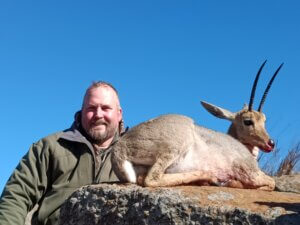
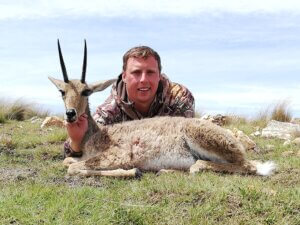
Appearance: The grey rhebok is a medium-sized antelope with a slender and graceful build. It has a distinctive coat that varies in color from grayish-brown to reddish-brown, with lighter underparts. The fur is coarse and short, providing good insulation against the cold. The most striking feature of the grey rhebok is its large, dark-colored eyes, which are set high on its head and provide excellent vision for detecting predators. Both males and females have short, straight horns that curve slightly backward, although those of males are typically thicker and longer.
Size: Grey rheboks typically stand around 70 to 80 centimeters (28 to 31 inches) tall at the shoulder. They can measure between 100 to 130 centimeters (39 to 51 inches) in length from the nose to the base of the tail. On average, they weigh between 20 to 30 kilograms (44 to 66 pounds), with males being slightly larger and heavier than females.
Habitat: Grey rheboks inhabit open grasslands, rocky slopes, and mountainous areas throughout South Africa. They are particularly common in fynbos and karoo habitats, where they feed on a variety of grasses, herbs, and shrubs. Grey rheboks are well adapted to rugged terrain and rocky outcrops, using their agility and speed to navigate steep slopes and evade predators.
Behavior: Grey rheboks are primarily diurnal, being most active during the early morning and late afternoon. They are typically solitary animals, although they may form small groups consisting of a few individuals, particularly during the breeding season. Grey rheboks are agile runners and can reach speeds of up to 55 kilometers per hour (34 miles per hour) when fleeing from predators. They are also excellent climbers and may seek refuge on rocky outcrops or cliffs when threatened.
Diet: Grey rheboks are herbivores, feeding on a variety of grasses, herbs, and shrubs found in their habitat. They are selective feeders, preferring certain plant species over others depending on availability and nutritional content. Grey rheboks may also consume leaves, shoots, and flowers, particularly during the dry season when food sources are scarce.
Reproduction: Breeding among grey rheboks can occur throughout the year, although peak mating seasons may vary depending on environmental conditions. After a gestation period of around seven months, females give birth to a single offspring, known as a lamb. The lamb is able to stand and walk shortly after birth, and it remains close to its mother for protection and guidance during its early days.