INFORMATION PURPOSES ONLY
 NAME: KUDU
 SCIENTIFIC NAME: TRAGELAPHUS STREPSICEROS
 WEIGHT: 270KG (M) 210KG (F)
 LIFESPAN: 14 YEARS
 ENEMY: SPOTTED HYENA, CHEETAH, LEOPARD, LION, WILD DOG

NAME: KUDU
SCIENTIFIC NAME: TRAGELAPHUS STREPSICEROS
WEIGHT: 270KG (M) 210KG (F)
LIFESPAN: 14 YEARS
ENEMY: SPOTTED HYENA, CHEETAH, LEOPARD, LION, WILD DOG
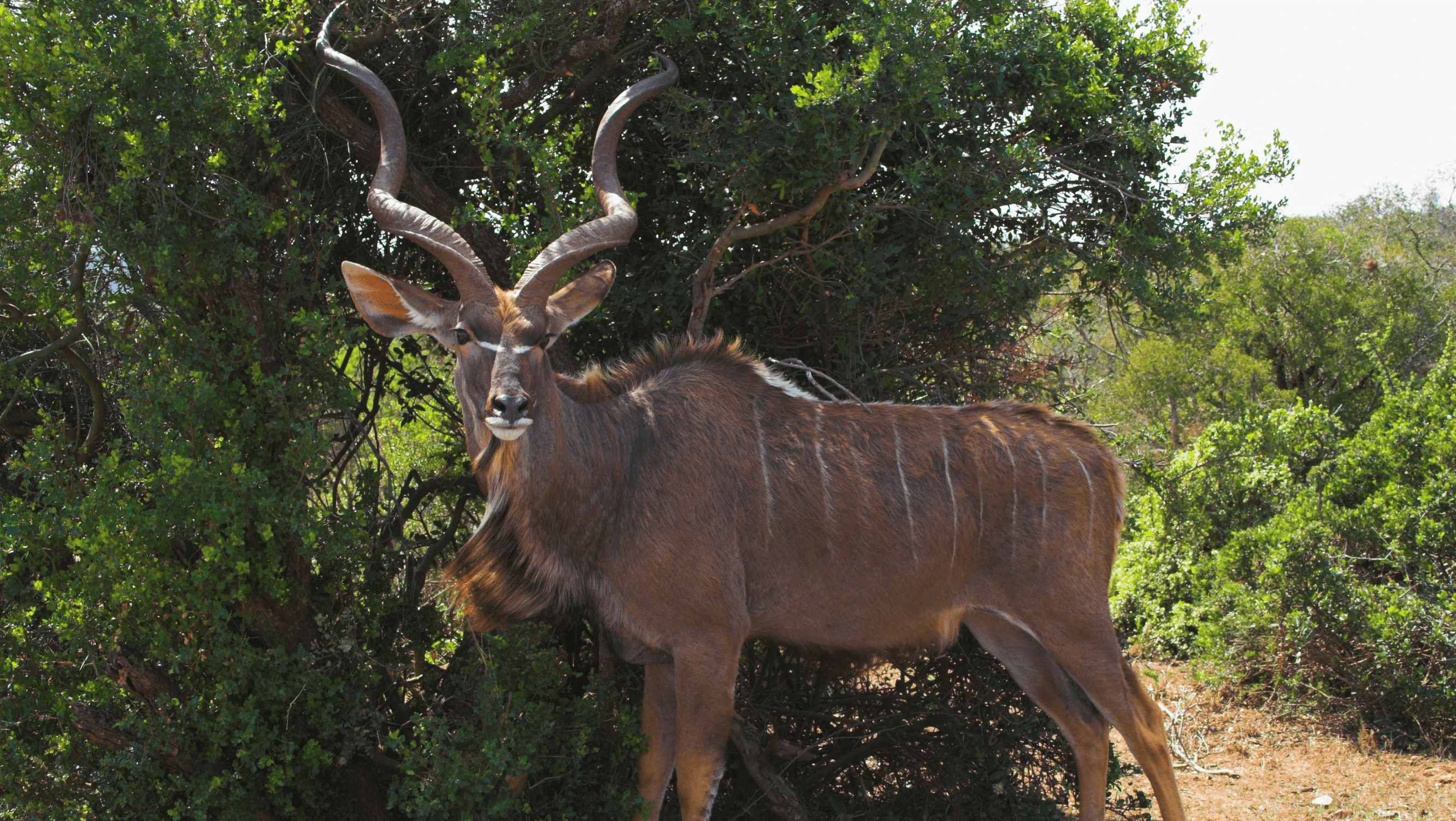
Appearance: Kudus are easily recognizable by their striking appearance. They have long, spiral horns that can reach impressive lengths, with multiple twists and ridges along their length. These horns are present in both males and females, although those of males tend to be larger and more heavily twisted. Kudus have a sandy to grayish-brown coat with white vertical stripes running down their sides. These stripes act as effective camouflage in their natural habitat, helping them blend into the dappled light and shadows of the savanna. Their large, rounded ears and slender bodies further contribute to their graceful appearance.
Size: Kudus are large antelopes, with males (bulls) being significantly larger than females (cows). Bulls typically stand around 140 to 160 centimeters (55 to 63 inches) tall at the shoulder and can weigh between 190 to 315 kilograms (420 to 695 pounds). Cows are slightly smaller, standing around 120 to 150 centimeters (47 to 59 inches) tall and weighing between 120 to 210 kilograms (265 to 460 pounds).
Habitat: Kudus inhabit a variety of habitats, including woodlands, savannas, and scrublands. They are most commonly found in areas with dense vegetation and access to water sources. Kudus are well adapted to both arid and semi-arid environments and can often be seen browsing on leaves and twigs in thickets and wooded areas.
Behavior: Kudus are primarily browsers, feeding on leaves, shoots, fruits, and flowers from a variety of trees and shrubs. They are most active during the early morning and late afternoon, resting in shaded areas during the hottest parts of the day. Kudus are generally solitary animals or may form small groups consisting of females and their offspring. Bulls are more solitary and may only join groups during the breeding season.
Social Structure: Female kudus form stable groups with their offspring, while males are more solitary and territorial, especially during the mating season. Bulls establish territories and compete with other males for access to females. They use their large horns to display dominance and resolve conflicts with other males.
Reproduction: Breeding among kudus typically occurs throughout the year, although peak mating seasons may vary depending on environmental conditions. After a gestation period of around 240 to 260 days, females give birth to a single calf, rarely twins. The calf is able to stand and walk shortly after birth and remains concealed in vegetation for the first few weeks of its life. Female kudus are attentive mothers and will nurse and protect their calves until they are old enough to fend for themselves.