INFORMATION PURPOSES ONLY
 NAME: SABLE ANTELOPE
 SCIENTIFIC NAME: HIPPOTRAGUS NIGER
 WEIGHT: 270KG (M) 250KG (F)
 LIFESPAN: 17 YEARS
 ENEMY: LEOPARD, LION, CROCODILE

NAME: SABLE ANTELOPE
SCIENTIFIC NAME: HIPPOTRAGUS NIGER
WEIGHT: 270KG (M) 250KG (F)
LIFESPAN: 17 YEARS
ENEMY: LEOPARD, LION, CROCODILE
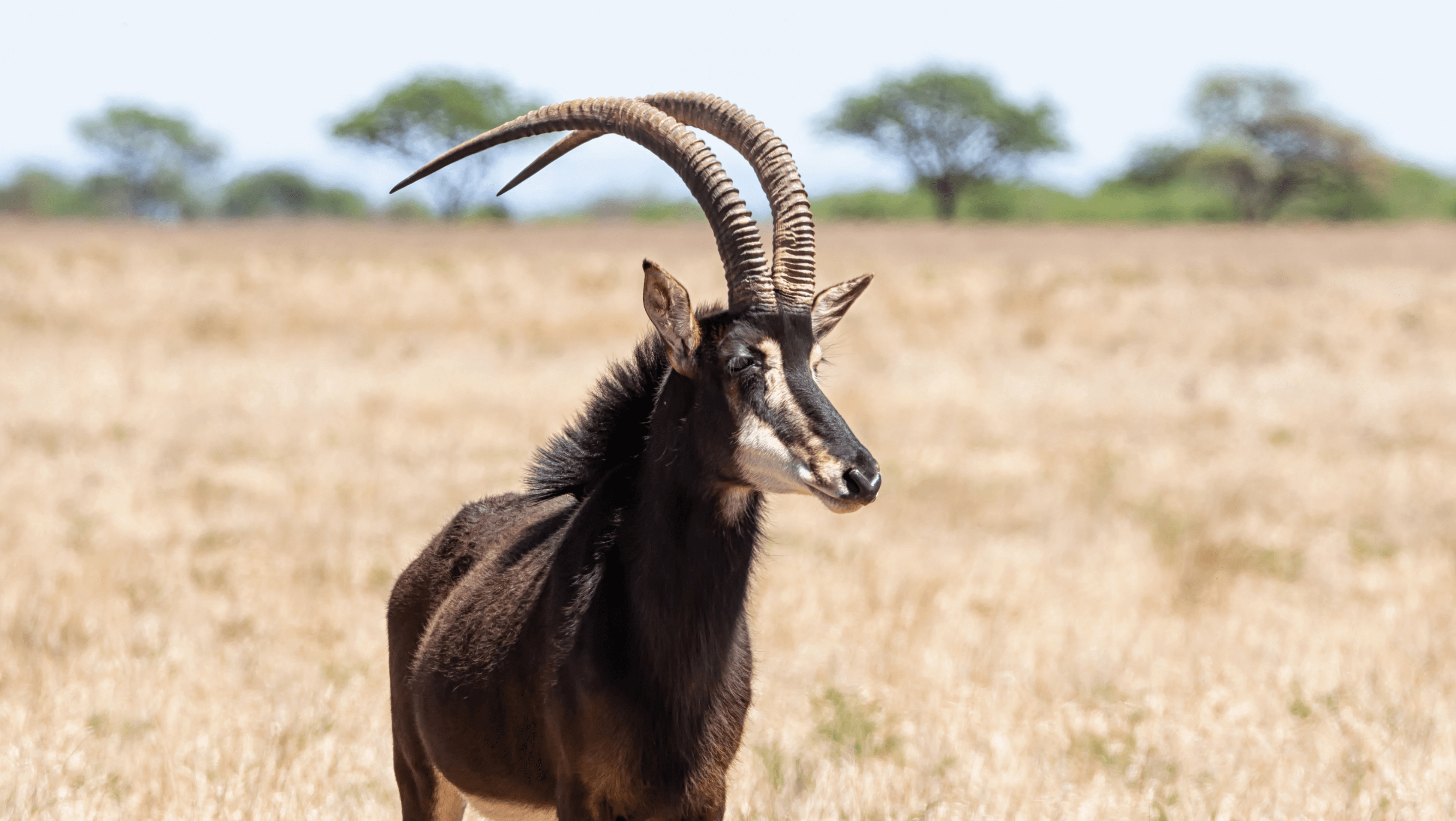
Appearance: Sable antelopes are large and robust animals with a striking appearance. They have a sleek, dark brown to black coat that contrasts sharply with their white underbellies. Adult males, known as bulls, are particularly impressive, featuring long, gracefully curved horns that can grow up to 150 centimeters (59 inches) in length. These horns sweep backward and slightly upward, with ridges along their length. Female sable antelopes, known as cows, are smaller and lack horns. Both males and females have a distinctive facial marking consisting of white patches on their cheeks and forehead.
Size: Sable antelopes are among the largest antelope species, with adult males typically standing around 120 to 140 centimeters (47 to 55 inches) tall at the shoulder and weighing between 200 to 270 kilograms (440 to 595 pounds). Females are smaller, standing around 110 to 130 centimeters (43 to 51 inches) tall and weighing between 150 to 220 kilograms (330 to 485 pounds).
Habitat: Sable antelopes prefer open woodlands, grasslands, and savannas with access to water sources such as rivers, streams, and watering holes. They are typically found in areas with a mix of grassy plains and scattered trees or shrubs, providing both food and cover. Sable antelopes are adaptable to a range of habitats but are particularly common in areas with tall grasses and dense vegetation.
Behavior: Sable antelopes are primarily diurnal animals, being most active during the early morning and late afternoon when temperatures are cooler. They are grazers, feeding on a variety of grasses, herbs, leaves, and shrubs found in their habitat. Sable antelopes are often seen in small herds consisting of several females and their offspring, with dominant males sometimes joining or leading these groups. They are territorial animals and will defend their territories from rival males using displays and vocalizations.
Reproduction: Breeding among sable antelopes typically occurs throughout the year, although peak mating seasons may vary depending on environmental conditions. After a gestation period of around eight to nine months, females give birth to a single calf, although twins are possible but rare. The calf is able to stand and walk shortly after birth and will remain close to its mother for protection and nourishment during its early days. Female sable antelopes are attentive mothers and will nurse and care for their offspring until they are old enough to fend for themselves.