INFORMATION PURPOSES ONLY
 NAME: WILDEBEEST BLUE
 SCIENTIFIC NAME: CONNOCHAETES TAURINUS
 WEIGHT: 270KG (M) 200KG (F)
 LIFESPAN: 20 YEARS
 ENEMY: SPOTTED HYENA, CHEETAH, LEOPARD, LION, WILD DOG

NAME: WILDEBEEST BLUE
SCIENTIFIC NAME: CONNOCHAETES TAURINUS
WEIGHT: 270KG (M) 200KG (F)
LIFESPAN: 20 YEARS
ENEMY: SPOTTED HYENA, CHEETAH, LEOPARD, LION, WILD DOG
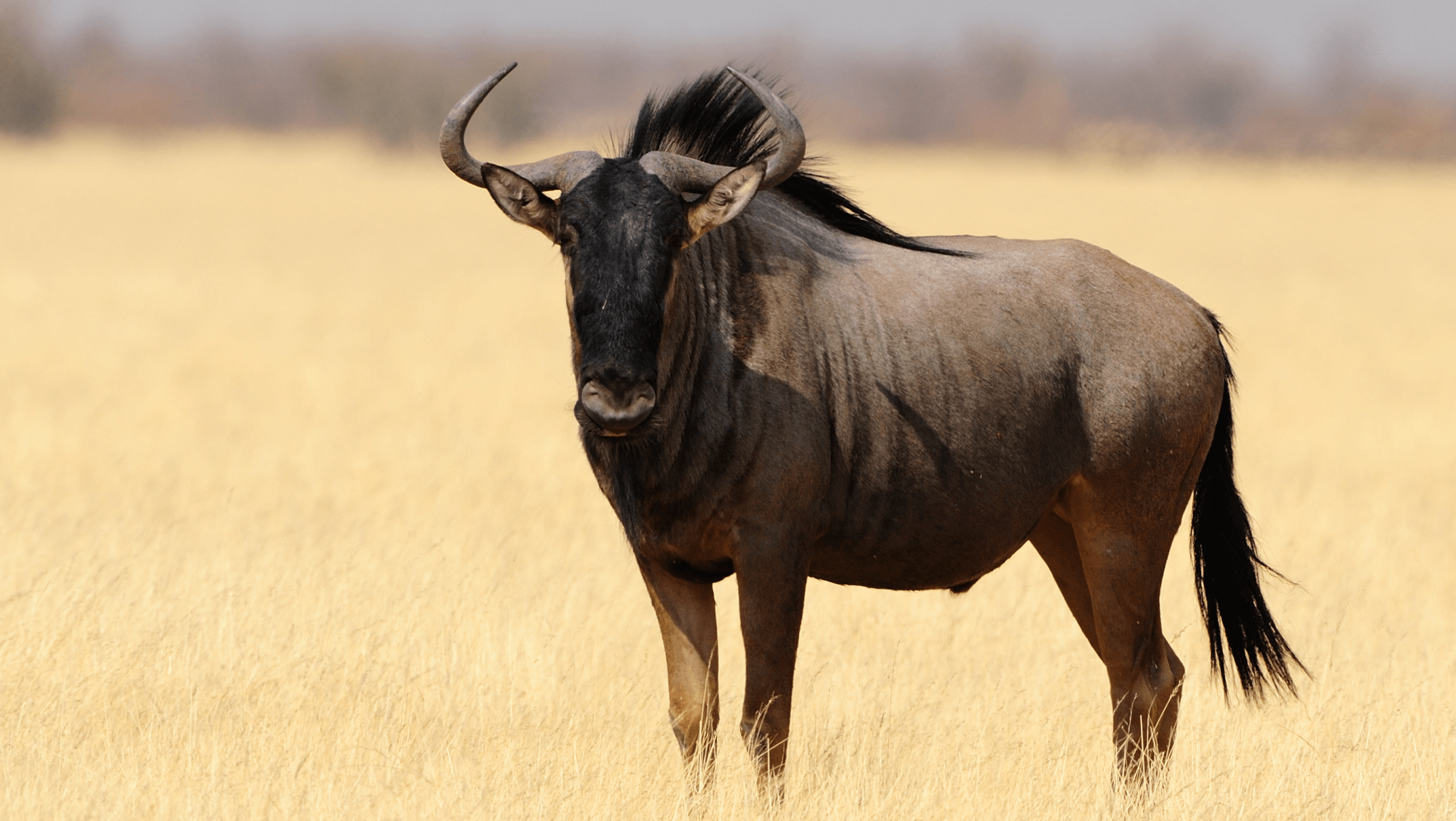
Appearance: Blue wildebeests have a robust build with a sloping back and muscular shoulders. They are characterized by their bluish-gray fur, which gives them their name. Their coats are slightly lighter on the underside and may have faint vertical stripes along the body. Blue wildebeests have a dark mane of hair along the neck and shoulders, which stands erect when they are agitated. Both males and females have curved, lyre-shaped horns, although those of males are typically larger and more robust. The face is marked by a broad, flat muzzle and a beard of stiff hair.
Size: Blue wildebeests are large antelopes, with adults typically standing around 1.2 to 1.5 meters (4 to 5 feet) tall at the shoulder. They can weigh between 150 to 250 kilograms (330 to 550 pounds), with males being slightly larger and heavier than females.
Habitat: Blue wildebeests inhabit a variety of habitats across eastern and southern Africa, including grasslands, savannas, and open woodlands. They are well-adapted to grazing in open plains and are often found in areas with access to water sources such as rivers, streams, and waterholes.
Behavior: Blue wildebeests are social animals and are often found in large herds consisting of hundreds to thousands of individuals. They undertake seasonal migrations in search of food and water, covering vast distances across the African plains. During migrations, they can form massive herds that attract predators such as lions and hyenas. Blue wildebeests communicate through vocalizations and body language, especially during mating displays and social interactions.
Diet: Blue wildebeests are herbivores, feeding primarily on grasses and other vegetation. They are selective grazers and will feed on a variety of grass species depending on availability and nutritional content. During the dry season, they may also browse on leaves and shrubs to supplement their diet.